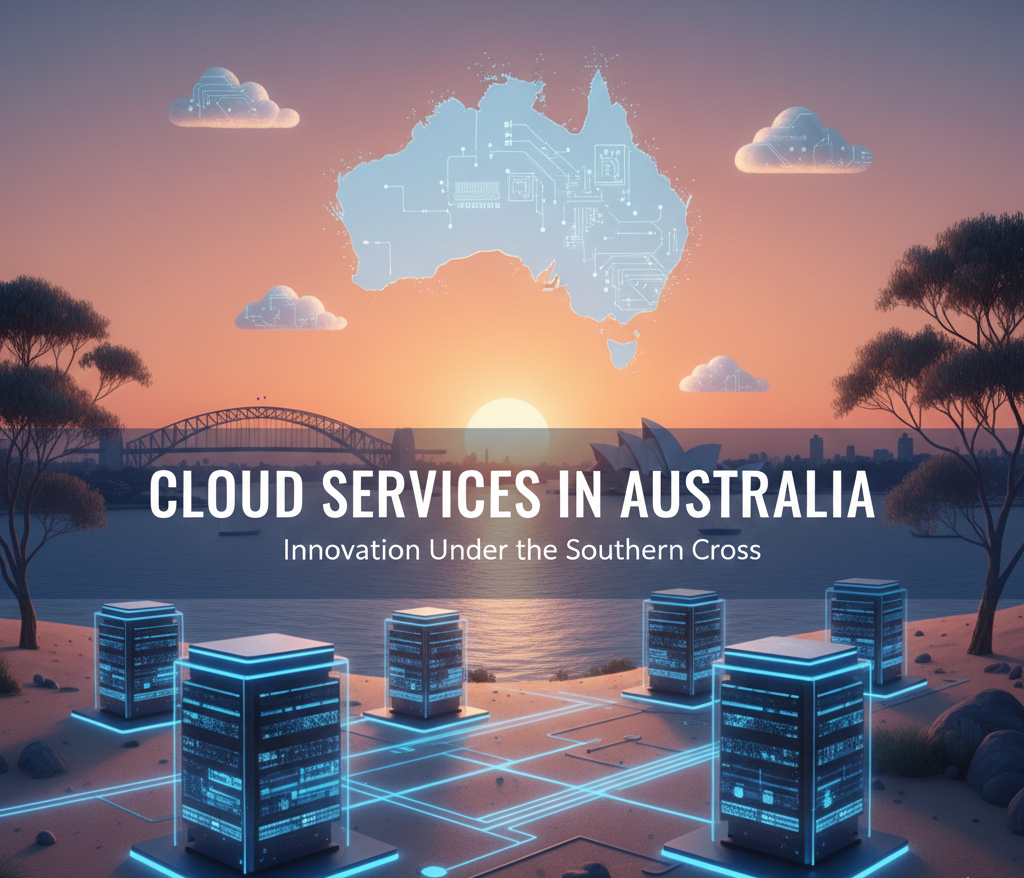
Cloud adoption in Australia has accelerated from a “nice to have” to a mission-critical priority. Government, finance, retail and fast-growing AI startups all need local latency, strict data residency and enterprise-grade security, and that demand has driven huge investments, new local regions, and a richer ecosystem of hyperscalers, telco cloud partners and data-centre specialists.
Below I’ll walk you through how the Australian cloud market looks in 2026, who the major players are, why local regions matter, and which vendors to shortlist depending on your goals.
Why local cloud regions matter in Australia?
Latency, compliance and resilience are the three big reasons many Australian organisations choose cloud regions physically located in the country. Running workloads in-country reduces round-trip time for customers and apps, helps meet sovereignty and regulatory controls (important for government and highly regulated industries), and supports disaster-recovery strategies across multiple availability zones or data-centre campuses.
Major global cloud providers and large local operators now supply in-country regions and interconnection facilities so IT companies in Australia can balance global scale with local control. For example, Amazon has significantly boosted investment in Australian data centres to meet rising demand. (Amazon News)
Top cloud players operating in Australia (who to watch)
- Amazon Web Services
AWS remains a leading choice for enterprises and startups thanks to its breadth of services (compute, storage, AI/ML, data analytics) and deep partner ecosystem. AWS operates multiple regions in Australia and announced large, multi-year investments to expand data-centre infrastructure – a move that’s helping bring more AI and hyperscale capacity onshore. (Amazon Web Services, Inc.)
- Microsoft Azure
Azure is a favourite for organisations heavily invested in Microsoft stacks (Windows Server, Active Directory, Office 365). Microsoft provides several Australian regions and strong hybrid offerings (Azure Stack, Azure Arc) that make it simple to blend on-premises and cloud workloads while meeting data residency requirements. (Microsoft Azure) - Google Cloud
Google Cloud is competitive for data analytics, Kubernetes, and AI workloads. It maintains Australian regions and continues expanding cloud services that are attractive to data-driven firms and tech teams focused on open-source tooling and machine learning. (Google Cloud) - Telstra
As Australia’s largest telco, Telstra combines network reach with cloud partnerships and managed services. Its cloud portfolio (including native integrations with hyperscalers) is attractive for businesses that prioritise connectivity, local support and integrated security. Telstra also runs managed/private cloud and hybrid solutions. (Telstra.com) - NEXTDC
NEXTDC is Australia’s leading data-centre operator, offering Tier-certified facilities across capital cities and purpose-built sites for hyperscale and AI workloads. Companies looking for colocation, direct interconnect to cloud providers or AI-ready campus capacity often shortlist NEXTDC. Recent partnerships and expansions highlight its central role in Australia’s infrastructure build-out. (nextdc.com) - Equinix
Equinix provides dense interconnection points and a wide footprint across Australia, making it easy to build multicloud and hybrid architectures with low-latency links between providers, carriers and enterprises. It’s ideal for businesses that need many private connections and large-scale peering. (US English) - Oracle Cloud
Oracle Cloud competes strongly in enterprise applications and government workloads. OCI offers Australian regions (including specialised government/sovereign regions) and is often chosen where heavy Oracle database workloads or legacy enterprise systems need cloud migration with minimal re-architecture. (Oracle)
How to pick the right cloud partner (practical checklist)
- Workload fit: Run a cost/benefit and performance test. Choose hyperscalers (AWS/Azure/GCP) for scale and broad service menus; choose telco or local providers for tight network integration or managed services.
- Data residency & compliance: Validate whether your workloads must stay in-country (e.g., some government and health data). Some providers offer sovereign or dedicated regions for extra assurance.
- Connectivity & latency: If your application is user-facing across Australian metros, placing compute close to users (local regions + edge locations) reduces latency. Telco–cloud bundles (e.g., Telstra) can simplify this.
- Egress & operating costs: Cloud price lists are complex – model storage IO, egress, reserved instances, and expected AI compute in cost estimates. Hyperscalers sometimes offer local pricing or committed-use discounts.
- Ecosystem & managed services: Use partners and integrators with proven delivery in Australia. Local data-centre operators (NEXTDC, Equinix) offer interconnects that ease multicloud architectures.
Common use cases gaining momentum in Australia
- AI/ML training & inference: Demand for GPU capacity and low-latency data pipes is skyrocketing – expect more hyperscaler onshore capacity and specialised AI campuses. (Amazon News)
- Hybrid cloud & edge: Industries like mining and utilities use edge compute with central cloud for analytics. Telcos and data-centre operators help bridge that gap. (Telstra.com)
- Sovereign / government clouds: Dedicated regions and government-only clouds are increasingly standard for sensitive workloads.
Quick decision guide (summary)
- If you need global scale + the broadest service set → Amazon Web Services, Microsoft Azure, Google Cloud.
- If you need integrated national networking, local support, or managed hybrid solutions → Telstra.
- If you need colocation, dense interconnection and AI-ready facilities → NEXTDC, Equinix.
If you run heavy Oracle workloads or need government-grade regions → Oracle Cloud.
FAQs for Cloud Services
Yes – most hyperscalers provide multi-region architectures. For global reach, combine local Australian regions with international regions (for backup, analytics, or global CDN) and optimise for latency and data sovereignty.
AI is driving investments in local GPU capacity and hyperscale campuses; expect more onshore investment and partnerships between hyperscalers and local data-centre operators.
Run a lift-and-shift pilot (non-critical app), measure cost and latency, secure data classification and compliance, then gradually modernise. Engage a local MSP or consulting partner for the first three months to avoid common pitfalls.